From First Click to Lasting Impression: How UI/UX and Branding Work Together to Build Trust

When a user lands on your website for the first time, the clock starts ticking. Within seconds, they subconsciously decide whether your brand is credible, relevant, and worth their time. This gut decision isn’t just based on how “pretty” your website looks — it’s a combination of UI/UX design and branding working together to create an experience that feels reliable and intentional.

So how do you turn that first click into lasting trust? Let’s break it down.

UI/UX (User Interface and User Experience) is often invisible when done right — but its effects are impossible to ignore. Clear navigation, readable typography, intuitive layouts, fast-loading pages — all of these elements contribute to the user’s sense of control and ease.

If users feel lost, overwhelmed, or unsure of what to do next, they won’t stick around. On the other hand, a thoughtful, frictionless flow builds confidence — not just in your site, but in your entire business.

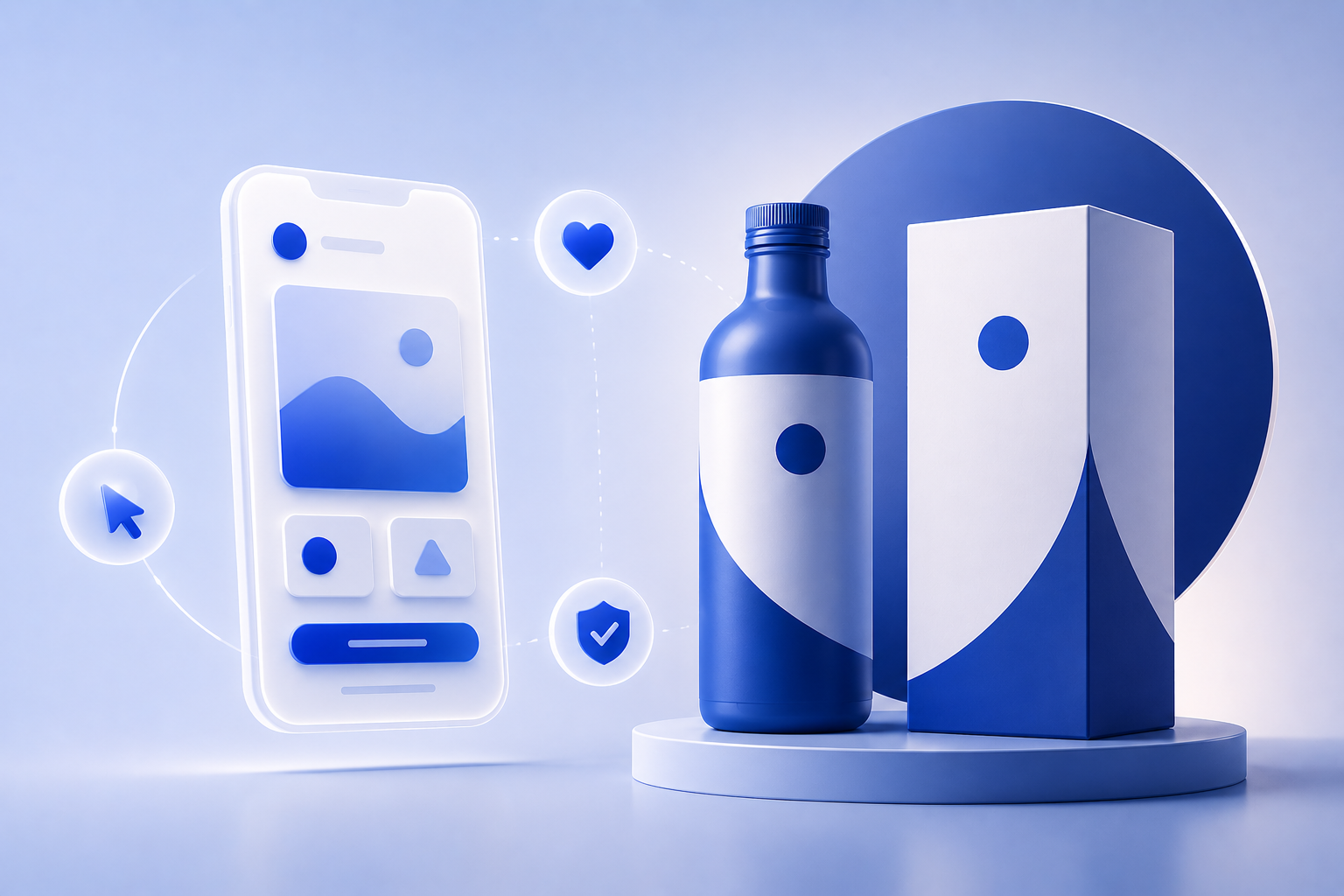
Branding is more than a logo or a color palette. It’s the tone, style, and emotional message that your business communicates. When branding is consistent across touchpoints — from your homepage visuals to button styles and microcopy — it sends a message of stability and professionalism.

Why does that matter? Because trust is built through consistency. If users see the same visual language and tone across your site, social channels, and emails, it reinforces your reliability.

Some key trust-building elements that lie at the intersection of branding and UX include:

  • Testimonials and reviews styled in brand fonts and colors
  • Secure checkout badges with consistent iconography
  • Founders’ stories placed in accessible, scannable formats
  • Loading states and error messages that reflect brand voice
  • Microinteractions that feel human, not robotic

These aren’t just nice-to-haves — they’re designed trust signals.

A beautiful site that’s hard to use is just as damaging as a functional site that looks outdated. The most successful brands are those that marry visuals with usability.

Think of your website like a handshake — would you rather meet someone who’s confident, clear, and welcoming, or someone who’s confusing and inconsistent? Your users are asking the same thing.

In the digital age, design is trust. Users don’t have time to figure you out — they want to feel that your brand understands their needs instantly. That starts with design decisions rooted in strategy, not just aesthetics.

So the next time you’re tweaking your website, don’t ask: “Does this look good?”
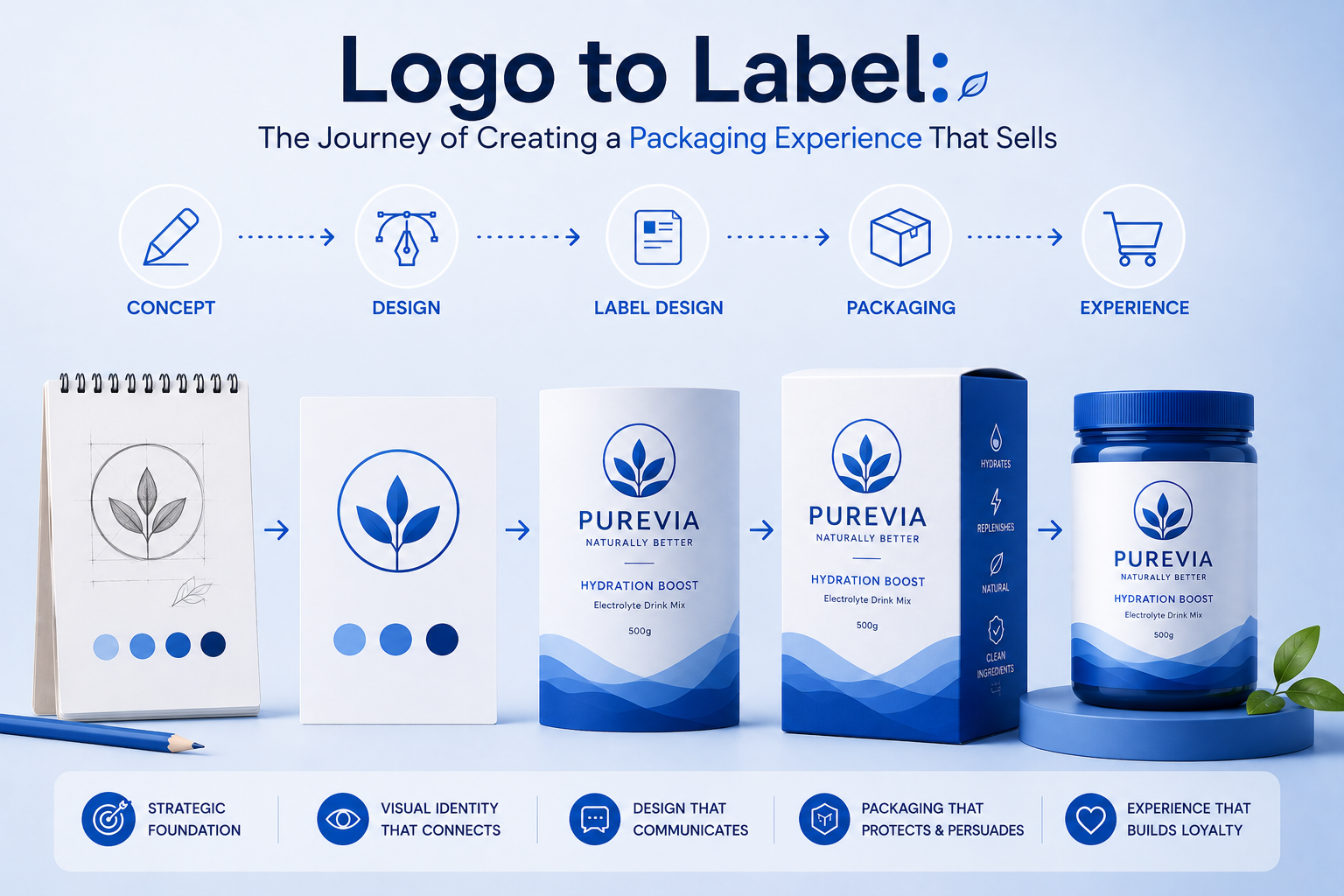
Logo to Label: The Journey of Creating a Packaging Experience That Sells

In the sea of product shelves — both physical and digital — packaging is more than a container. It’s a handshake. It’s a billboard. It’s the only salesperson your product has before someone even tries it.

While a strong logo builds recognition, it’s the full packaging experience that builds desire, emotion, and trust. From dielines and finishes to typography and storytelling, every inch of your label is a chance to sell without saying a word.

So how do we go from a flat logo file to a full-blown packaging identity that moves off shelves?

Let’s walk through the journey.

Packaging isn’t just about “looking good.” It’s about understanding:

  • Who you’re selling to
  • Where the product will sit (online, retail shelf, luxury boutique?)
  • What emotion you want to trigger

Before a designer opens Figma or Illustrator, we define positioning. Is your brand playful? Premium? Purpose-driven? Sustainable? That clarity determines every creative choice moving forward.

Your logo may look great on a website or business card — but can it scale down to a tiny label? Can it work in foil or embossing? Does it hold up in monochrome for regulatory print applications?

A good packaging system includes:

  • Primary logo lockup
  • Stacked or horizontal variations
  • Monogram or icon versions

Adaptability ensures brand consistency across formats — from pouch to bottle to shelf-ready box.

Every product comes with constraints: size, shape, surface, material. Your dieline is the blueprint of that surface.

Think of dielines as the stage for your design. It includes:

  • Bleed areas
  • Safety margins
  • Fold/crease marks
  • Regulatory compliance zones (especially for food, cosmetics, or pharma)

Designing within — and often creatively around — these boundaries is the difference between amateur packaging and professional shelf appeal.

Colors and fonts don’t just decorate — they communicate.

  • Earth tones + serif fonts = eco-conscious, organic
  • Bright pastels + rounded fonts = youthful and friendly
  • Monochrome minimalism = luxury and premium positioning

The typeface hierarchy (headlines, body copy, product descriptors, net weight) should feel natural to read — and aligned with your brand’s tone.

Legally, your packaging must include a lot of info — ingredients, barcodes, instructions, batch numbers.

But the challenge is making this functional data look elegant.

Use:

  • Icons for instructions
  • Grid layouts to organize info cleanly
  • QR codes for extended storytelling or product origin tracking
  • Design-led back panels that don’t feel like afterthoughts

Information should never feel like a distraction — it should enhance trust.

How a product feels in someone’s hand affects how they perceive it.

Options include:

  • Matte vs gloss finish
  • Embossing/debossing
  • Foil stamping
  • Sustainable or recycled stock
  • Minimal ink for a raw, natural feel

Packaging is tactile branding. Make it worth the touch.

Once the design is ready, we test:

  • 3D mockups in real-life scenarios
  • Shelf comparison against competitors
  • Distance readability — can someone recognize the brand from 3 feet away?

This testing ensures your packaging not only looks good up close, but also performs in a fast-paced buying environment.

Your logo starts the conversation. Your label continues the story. The entire packaging experience — from unboxing to recycling — shapes the brand memory.

In today’s world, where social sharing, sustainability, and sensory delight are expected — packaging isn’t the end of branding. It’s often the most visible beginning.

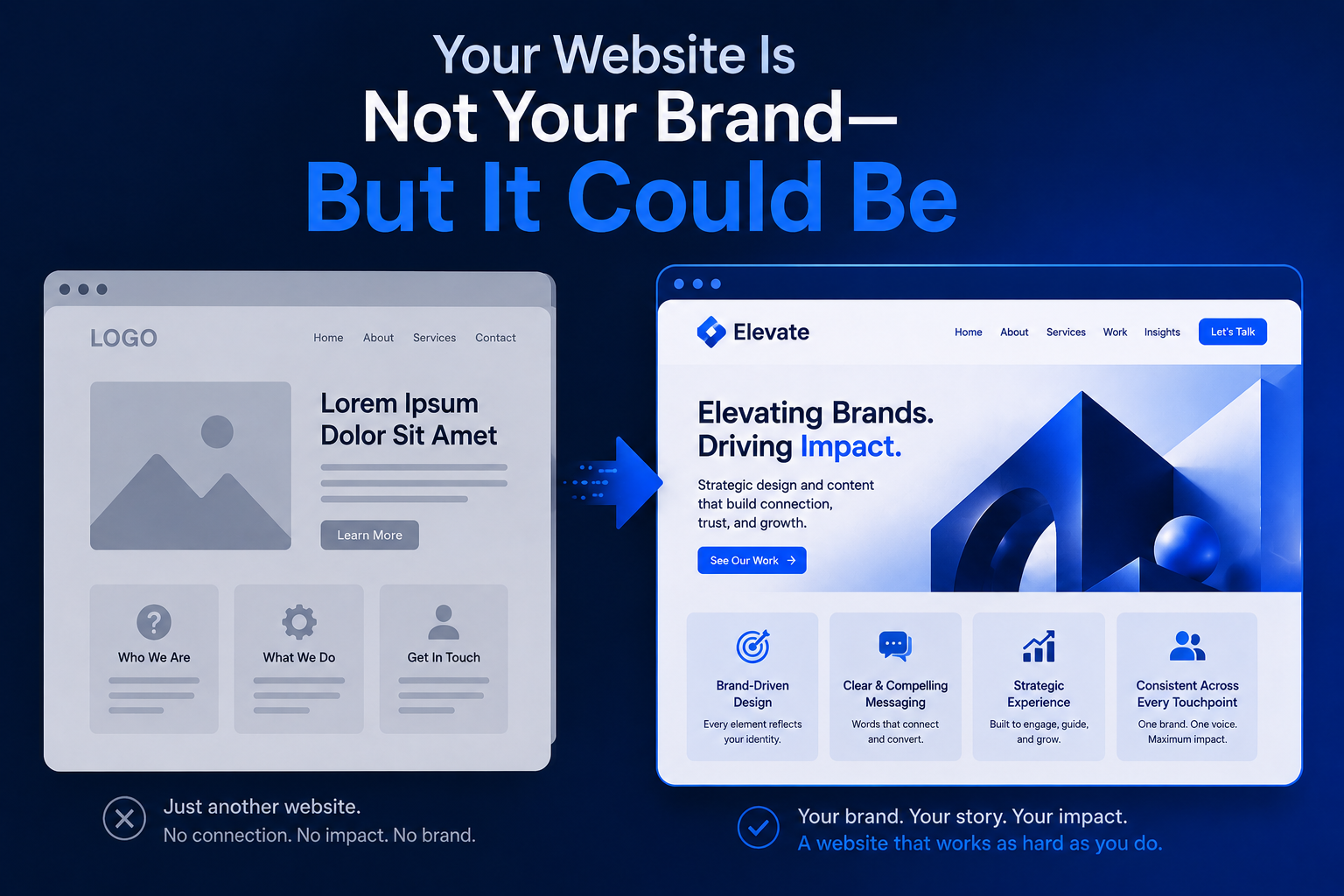
Your Website Is Not Your Brand—But It Could Be

Let’s get one thing straight:
Your website isn’t your brand.
But in most cases, it’s the first and most frequent interaction someone has with your brand.

So, while your brand is much more than just a website — a combination of voice, values, visuals, product, and personality — your website is where all of it either comes alive or falls apart.

That’s why a strong brand isn’t just communicated through visuals; it’s experienced through your website.

Let’s break down the gap between “website” and “brand” — and how to close it.

1. Your Website Is a Stage — Your Brand Is the Script

Think of your website as a stage.
The design, layout, colors, and animations? That’s the set.
Your content and interactions? That’s the dialogue.

But what story are you telling?

Without a clear brand strategy, even the best website feels hollow. And without a strong web presence, even the best brand feels invisible.

You need both:

  • Branding to define what you stand for
  • Web design to express it through experience

2. A Branded Website Feels Consistent Across Every Scroll

One of the most overlooked conversion killers is inconsistency.

Does your home page feel premium but your About page looks like a 2015 Word template?
Does your copy tone shift from playful to corporate without reason?

Brand-driven websites ensure:

  • Tone of voice remains unified across all content
  • Typography and spacing follow set guidelines
  • Color and imagery reinforce emotions and values
  • Microinteractions (like button hover or scroll effects) reflect brand personality

A consistent experience doesn’t just look better — it feels more trustworthy.

3. When Branding Guides UX, You Get Better Business Results

Branding isn’t just aesthetic. It should influence how your website behaves.

For example:

  • A bold, youth-oriented brand might use oversized text, bold CTA buttons, and punchy headlines.
  • A luxury skincare brand might lean on soft motion, delicate typography, and fewer words with more space.

Good branding gives direction to UX:

  • What should feel fast?
  • Where should users pause?
  • What emotion should each scroll section evoke?

When users feel emotionally aligned with a site, they spend more time and trust the offer faster.

4. Design Without Brand Is Decoration

Many websites look good — but feel empty.

Why? Because design was done in isolation.
There was no brand compass. No story. No “why.”

Great branded websites ask:

  • What’s our mission, and how do we reflect it on this page?
  • What’s our tone — humorous, warm, edgy, clean?
  • How should the user feel at the end of this scroll?

This alignment is what turns visitors into fans — and eventually, customers into advocates.

5. The Best Websites Feel Like Walking Into a Store

Ever walked into a store and instantly felt what the brand stood for?

That’s what your website should feel like:

  • Immediate clarity on what the brand does
  • Familiar design elements from the packaging, social media, and ads
  • Emotionally resonant copy that mirrors your brand voice
  • Clear flow — like having a good store attendant guide you

Whether your site is a D2C product page, a SaaS homepage, or a service portfolio — it should offer the same vibe and values as the rest of your brand ecosystem.

6. So, Can Your Website Become Your Brand?

Not entirely — but it can and should carry your brand forward.

In today’s digital-first world:

  • Your website is your first pitch
  • Your social media is your small talk
  • Your product or service is your promise
  • Your follow-ups are your reputation

Your website isn’t the brand.
But it’s the strongest delivery vehicle you have to communicate it — clearly, consistently, and confidently.

When done right, your website doesn’t just describe your brand —
it embodies it.

So instead of asking, “How should the website look?”
Start asking, “How should the website feel like our brand?”

Because that feeling is what sticks. That’s what converts.
And that’s how your website becomes a true expression of your brand.

Why One-Stop Agencies Outperform Freelancers in Scaling Brands

The world of design and marketing is filled with brilliant freelancers — talented specialists who can build logos, write content, or develop websites. And for early-stage businesses or startups on a budget, freelancers can be a great fit.

But when it’s time to scale, time to evolve into a stronger brand, time to grow beyond the basics — one-stop creative agencies become the game changers.

Why?

Because scaling isn’t just about doing more. It’s about doing things together — and that’s where freelancers and solo efforts often fall short.

Let’s break down why one-stop agencies are better equipped to help brands grow and succeed in today’s competitive digital landscape.

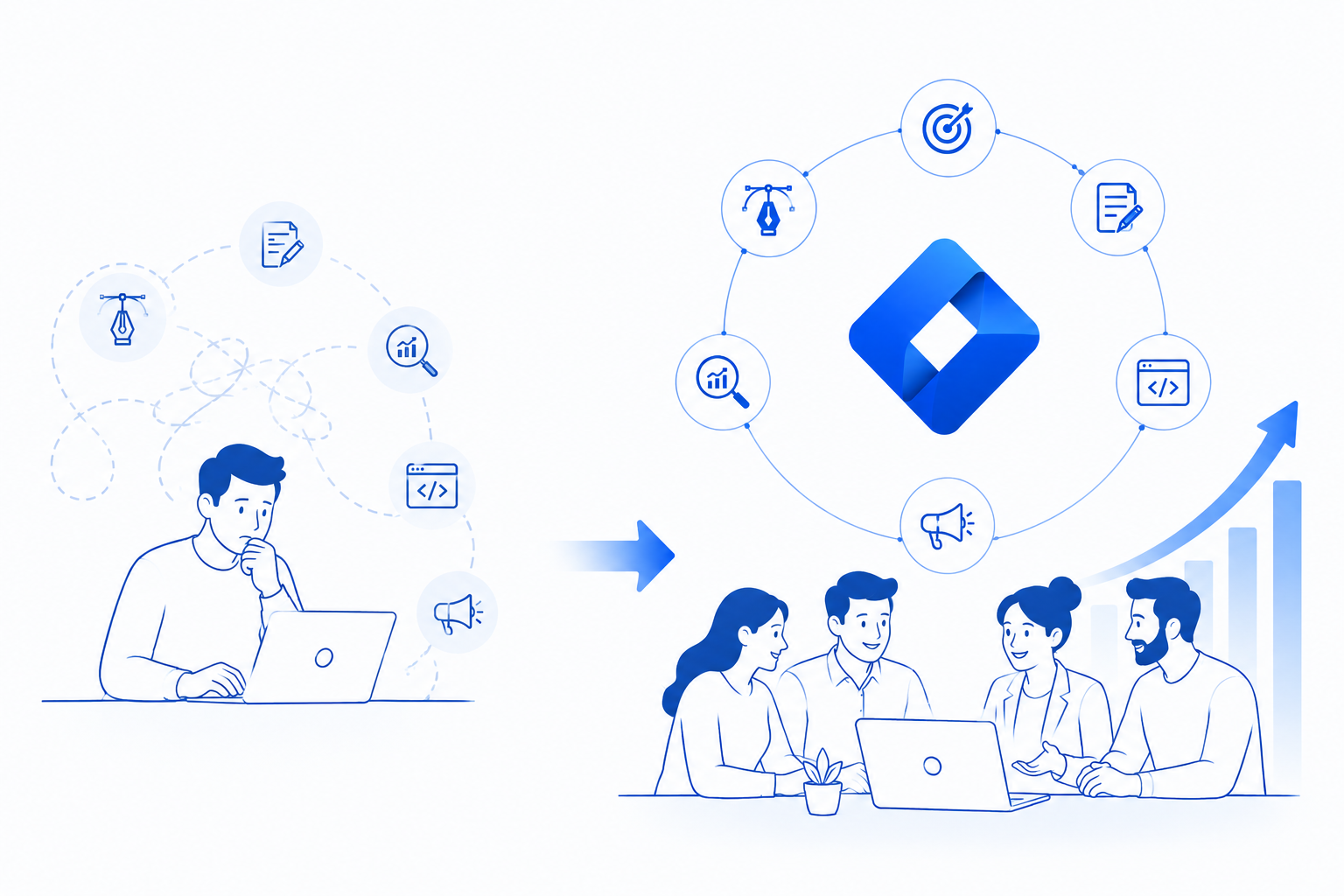
1. You Get a Unified Vision, Not Patchwork Projects

When you hire multiple freelancers — a designer here, a copywriter there, and a developer somewhere else — you’re acting as the project manager. You’re the one trying to align tone, timelines, visual consistency, and user experience.

With an agency:

  • Strategy, design, content, and development are all handled under one roof
  • There’s a core vision and direction that ties everything together
  • You don’t waste time playing the middleman or fixing misalignment

This unified approach leads to cohesive branding, smoother user journeys, and better-performing assets.

2. Agencies Scale With You — Freelancers Can Stall

Freelancers are often solo or limited in bandwidth. They might be juggling multiple clients, limited in scope, or unavailable for urgent rollouts.

Agencies, on the other hand:

  • Have dedicated teams that can grow as you grow
  • Offer faster turnaround through collaboration and parallel workflows
  • Can take on multiple campaigns, features, or assets at once

If you’re launching a new product, entering a new market, or going omnichannel — agencies have the structure and scalability to move with you.

3. End-to-End Execution = Faster Results

Imagine this:

You’re building a product landing page. A freelancer designs it. Another writes copy. A third one develops it. You end up waiting for pieces to come together — and the output often lacks synergy.

Agencies offer:

  • Strategy → Design → Content → Build → Launch in one flow
  • In-house collaboration that reduces friction
  • Performance testing + optimization in real-time

This means better results, faster — and fewer revisions and errors along the way.

4. Access to Broader Expertise

Freelancers often specialize in one or two skills. Agencies bring multi-disciplinary firepower:

  • UI/UX Designers
  • Visual Brand Experts
  • Copywriters
  • Performance Marketers
  • Developers
  • Product Strategists

This means you’re not just getting an output — you’re getting strategic guidance and expert input at every stage of the funnel.

And when things evolve — say, your website needs to integrate with a CRM, or your packaging needs to reflect a rebrand — the agency already has the expertise in place.

5. Stronger Accountability and Systems

Freelancers may disappear mid-project or go silent during delivery (we’ve all heard the horror stories).

Agencies:

  • Operate with contracts, teams, and SLAs
  • Have project management systems in place (like Trello, Notion, Slack, Basecamp)
  • Provide onboarding, check-ins, and feedback loops
  • Are often registered businesses — meaning more professionalism, clearer payment systems, and stronger commitment

It’s not just about creativity — it’s about process and reliability.

Whether it’s your Instagram grid, website UI, packaging box, or investor deck — consistency is king.

Agencies ensure:

  • Every touchpoint follows your brand guidelines
  • Voice and tone stay on-brand across platforms
  • Visual assets align with campaign goals and user expectations

Freelancers, unless tightly managed, often bring personal style instead of adhering to a brand’s evolving identity. Agencies, by contrast, design systems that scale, not just pretty visuals.

Freelancers are great for projects. Agencies are great for partnerships.

If you’re scaling a brand — with new offerings, bigger audiences, and bolder goals — you need a creative team that’s not just capable but collaborative, consistent, and cross-functional.

That’s what one-stop agencies deliver:
Not just execution, but elevation.